Wednesday, February 11, 2015

Why a Certified Cat Friendly Practice is Important

Cats are the clear pet of choice, with many more owned cats than dogs. Yet, when it comes to a cat’s health, we don’t always treat them the same. Cats may be number one in a pet owner’s heart, but dogs seem to receive more consistent and regular veterinary health care. Surprisingly, cat wellness and veterinary care do not appear to be as high of a priority among cat owners.

Consider this:
• Almost twice as many cats than dogs never visit the veterinarian
• Of the cats that do visit the veterinarian, they average 26 percent fewer visits than dogs

In order to improve the health and well-being of cats, the American Association of Feline Practitioners (AAFP) has initiated the Cat Friendly Practice (CFP) program. More info can be found at www.catvets.com/cat-owners.

Navigating the Veterinary Visit
Stress is one of the top reasons for lack of or skipped visits for cats. Owners report that the stress of transporting their pets to the veterinarian, along with the cat’s reluctance to enter the carrier or a new and unfamiliar environment, causes anxiety for cats and their owners. Both feel anxiety and stress before they even set foot in the office. Once in the office, there are other potential stressors including dogs or other cats in the waiting area, staff who do not know how to handle cats, and a canine-focused environment.
CFPs are the antidote to the stressful veterinary visit for cats!

 CFPs Elevate Standard of Care
CFPs are sensitive to cats’ distinct characteristics and equipped to address their physical and behavioral needs, thereby increasing cat owner knowledge, veterinary visits and ultimately improving the health care of cats by educating on the importance of wellness visits and preventive care.

Veterinarians and their team members who have achieved CFP status regard the practice with an entirely new perspective. The practice must train staff on the distinct needs of cats and assess their physical environment, as well as the delivery of medical care provided. Each CFP has at least one designated‘Cat Advocate’ on staff – a knowledgeable professional leader who ensures feline-focused standards are met and followed.

What to Expect From a CFP?
CFPs consider the unique obstacles cats battle in the waiting and examination rooms, handling of feline patients, attitude and knowledge of staff, and the comfort and concern for cats and their owners. At a CFP-designated clinic, pet owners will experience cat-friendly features such as:

• Skilled staff—Within a CFP, clients will find that the staff is well-versed in feline-friendly handling techniques and can expertly treat frightened cats. Furthermore, the staff is well-trained in alternate techniques to calm an anxious cat and ensure that examinations and procedures do not escalate anxiety.
• Individualized health care plan—As with humans, health issues change as aging occurs. The practice will create a health care plan that is specific to your cat. Getting yearly check-ups, and often more than once a year for older cats, can help a condition or disease so it can be treated early on.
• Low-stress environment—One obvious advantage of a CFP is a physical environment that is all about the cat including special waiting rooms or waiting accommodations, feline-sensitive examination rooms and ward facilities, and equipment for cats.

Other areas that are vetted for cat safety and comfort include the operating room and anesthesia, diagnostic imaging, laboratory facilities, and dentistry.


Finding a Cat Friendly Practice
The decision to seek out a CFP is an important step. As humans, we take great care in searching for health providers who meet our needs. Now, with the CFP program, it just got a lot easier to find a veterinary practice that is expertly suited to address your cat’s unique needs and to provide you with advice and information that is critical to your cat’s health.

Cat Friendly Practices are listed on the AAFP website at www.catvets.com.

Munford Animal Hospital is CFP designated.

Tuesday, January 27, 2015

Why is Dental care important?

Dog with ToothbrushDid you know that 4 out of every 5 dogs over the age of 3 years has some sort of periodontal disease? So it is very important to have your pet checked on a regular basis for dental disease.

Dental disease is an infection of the teeth, gums, and surrounding structures and is by far the most common major health problem of cats and dogs. According to the American Veterinary Dental Society, more than 80 percent of dogs and 70 percent of cats show signs of oral disease by the time they are 3 years old.

What is Dental disease?
Dental disease begins when bacteria in the mouth forms plaque that sticks to the surface of the teeth.  The plaque will harden into dental calculus (tartar), which is firmly attached to the teeth.
 
The plaque and calculus spreads under the gum line and this Bad Bacteria  will set in motion a cycle of damage to the supporting tissues around the tooth, eventually leading to loss of the tooth. Bacteria under the gum line secrete toxins, which contribute to the tissue damage if untreated. These bacteria also stimulates the animal’s immune system and eventually causes damage to the supporting tissues of the tooth.
 
If left untreated the bacteria from the mouth can enter the bloodstream and be carried around the body. Studies in dogs have shown that periodontal disease is associated with changes in the heart, liver, and kidneys. 


POD / DENTAL DISEASE and Pet Oral infectionWhat are the signs of dental disease?
Bad Breath
Excessive salivation
Dropping food or not wanting to eat
Facial swelling
Bleeding gums, swollen or red gums
Pawing at the face
Loosing Teeth


What all is included when a Dental is performed?
Your pet  is placed under anesthesia to prevent any anxiety or pain during the procedure. This allows the veterinarian and technician to thoroughly examine your pet mouth and to remove any damage teeth that may be causing pain or irritation. The risk of anesthesia is very small compared to the significant  risk of internal organ damage that occurs with untreated dental disease

After all problems have been addressed and a through examine has been performed the teeth get a good cleaning to remove all the built up tartar from the teeth as well as under the gum line.

The teeth are  polished to prevent pitting of the tooth enamel. This also helps prevent buildup of plaque and tartar.
A fluoride treatment helps to strengthen the enamel and reduces sensitivity of the teeth.
A Dental sealant (OraVet) is also applied at the end. This sealant applied to the tooth surface at the time of the dental cleaning helps to reduce the rate of bacteria colonization and plaque buildup on the teeth.

What can we do at home to prevent dental disease ?
CET Dental chews
t/d food
Brushing teeth

*** During dental health month we will be giving away all of the above with information on how to use all to maintain great dental health!


Do I need to make an appointment for my dog to have a dental cleaning?
Yes! The awesome thing about February is that during this month we offer FREE dental exams! This allows the doctors to perform any pre- anesthetic tests and examine your pet for any other underlying disorder that may need to be addressed prior to the procedure. We may also determine that antibiotics need to be prescribed before the procedure takes place.  We will then schedule your pets dental for a specific date and time.
On the day of your pets dental, they are not allowed to eat anything but they can have water up until the procedure. They can have dinner the night before but no food after midnight. The procedure will be performed in the morning and your pet will be able to go home that afternoon. An assistant will always call you and give you updates but you are more than welcome to call and check on your baby throughout the day!

DURING DENTAL HEALTH MONTH WE WILL BE TAKING $20 OFF OF EVERY DENTAL PROCEDURE!

If you have  any questions about your pets dental care needs, please give us a call or come by for your free dental exam. This is a great time to get your pets teeth clean and start the new year with fresh breath! Also its a great way to try out awesome dental products for free in the gift bags!


Wednesday, November 5, 2014

Believe in Laser Therapy

In Veterinary practice, therapy lasers can be used alone or in combination with other tools to decrease recovery time, help manage pain and treat other conditions.

How Does it Work?
Light energy enters the damaged cells and stimulates inter-cellular activity. This reduces pain in the area and speeds recovery of the damaged cells. Once the cells recover, the healing process is complete.

What are the Benefits of laser therapy?
Relief of Chronic pain, such as arthritis
Relief of acute pain, such as trauma or injury
Strong anti- inflammatory effect
Stimulates healing of damaged tissue
Speeds recovery of the structural integrity of injured region
Improvement of local blood circulation
Postoperative pain relief and faster wound healing.

One of its great benefits is that it is non-invasive and well tolerated with no known side effects. It also offers a great promise in some hard to treat disease processes

What can my pet and I expect during a Treatment?
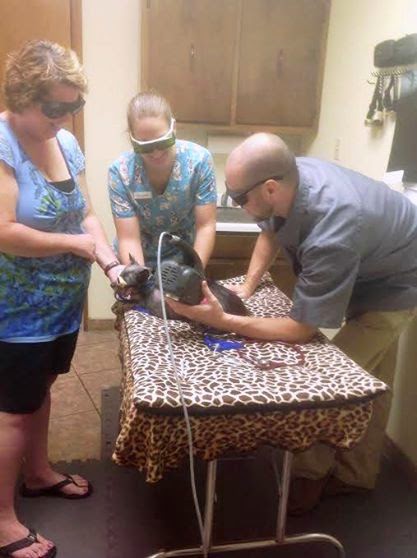
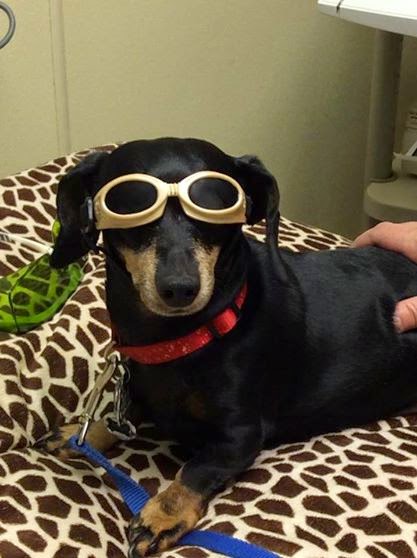
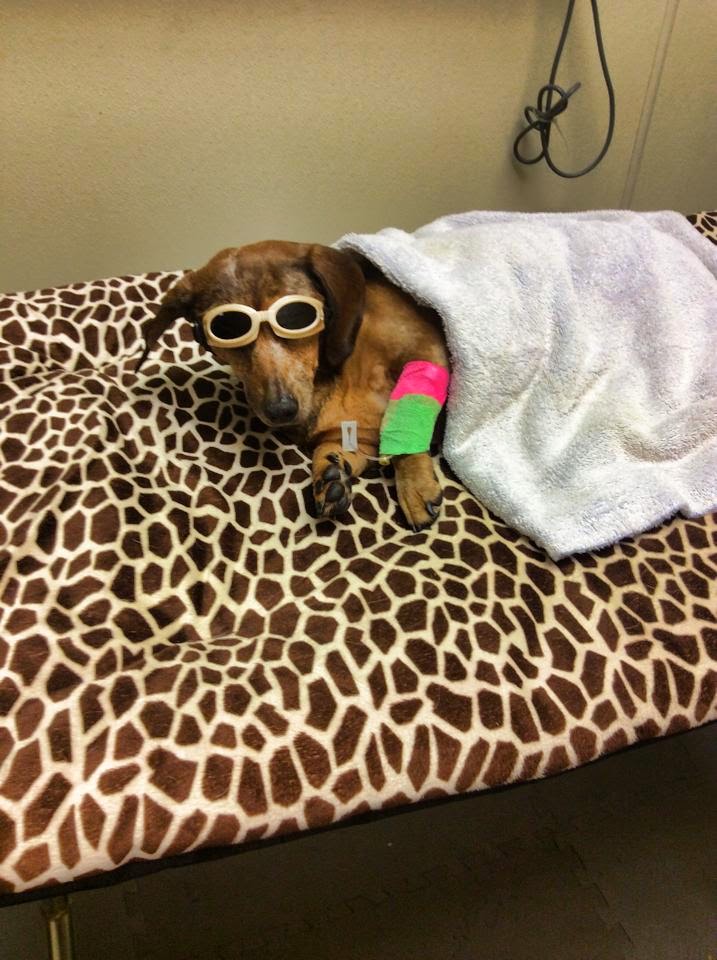
Laser therapy is a completely painless treatment that lasts an average of 3 minutes. Your pet may experience a comfortable sensation at the point of application. Also you and your pet will be given special goggles and doggles to wear during the procedure. Don't worry we haven't met a patient or owner who did not look cool while wearing them!

What can be expected after the Treatment?
Most patients see positive results in one to three treatments. Acute conditions can subside with as few as one set of treatments. Chronic conditions can be managed with regular monthly treatments. And there are no known negative side effects.

What conditions have we used laser therapy for?
We have used laser therapy for a variety of different conditions such as:
Arthritis pain
Post-operation healing
Wound healing
Tendonitis
Lick Granulomas
Inflamed Ears/Ear infections
Hip Dysplasia
Disc Disease/IVDD
Joint disease
Bone Fractures


We are extremely proud to offer Laser therapy as part of our practice. The application of laser therapy is an exciting tool to aid in the treatment of a number of medical conditions. As the use increases, more standardized treatment protocols continue to evolve. If you think your pet can benefit from laser therapy, please come see us. We will be happy to go over the many applications, the success stories and can arrange the perfect protocol for you and your pet.


Thursday, September 18, 2014

The Importance of Routine Lab Work

Blood tests can be used to detect, treat, and prevent potentially dangerous illnesses. 
We offer a wide range of preventative care from physical examinations, heartworm tests, and intestinal parasite exams to full panel bloodwork. When we consider your pets health, the lab work may be one of the most important pieces of his or her puzzle. The lab work will tell the doctors about the status of your pets internal functions "the unseen" . 

The signs when your pet is actively sick are not always obvious or easily noticed. Routine screenings not only uncover diseases before its too late, but can also help you avoid significant medical expenses and risks to your pets health!

Why does my young dog need bloodwork?
When laboratory testing is done as part of your pet's annual examination, those values can be used to establish baselines and  trends over time. We can review your pet's health record at each visit and spot changes and trends sooner. This means often before a serious disease like kidney failure can develop, we can make changes to benefit and extend the life of your pet.


We feel so strongly about obtaining this information that we offer our clients  special preventative care packages with their annual vaccines. This is the most economical way to check the status of your pet's overall health. We believe in providing your pets with the best health care possible. The prevention packages allow us the ability to discover hidden illnesses such as early kidney disease or diabetes. By catching illnesses early we have the best chance to treat efficiently. We offer 3 packages for both cats and dogs. 

Dogs:
Good includes: Short Chemistry panel, Complete Blood Count, Thyroid check and Heartworm test.
Better includes: Full Chemistry panel, Complete Blood Count, Thyroid check and Heartworm test. 
Best includes: Full Chemistry panel, Complete Blood Count, Thyroid check, Heartworm test, and Urinalysis.

Cats
Good includes: Short Chemistry panel, Complete Blood Count, Thyroid check, FIV and Leukemia Test
Better includes: Full Chemistry panel, Complete Blood Count. Thyroid Check , FIV and Leukemia Test
Best includes: Full Chemistry panel, Complete Blood Count, Thyroid Check, FIV, Leukemia Test, and Urinalysis

What do these test mean? 
Complete blood count (CBC) tells you if your pet has an infection, if inflammation is present or if your pet is anemic
Chemistry Panel - including electrolytes provides information about your pet's liver, kidneys and pancreas; as well as other functions of the body, such as blood sugar and hydration levels
A urinalysis - identifies an infection, possible crystals or inflammation in the urinary tract
Thyroid test - detects whether or not your pet's thyroid gland is functioning properly. Thyroid disease is very common in older cats and dogs

There is a great handout that explains lab work and results more extensively. The handout can be found at Blood work and your pet .


Monday, July 28, 2014

Vaccines

AUGUST IS VACCINE AWARENESS MONTH!

We recommend all dogs be vaccinated against canine distemper, canine parvovirus, canine hepatitis and rabies. There may also be other vaccines that your pet may need such as Bordetella vaccine. We will review each of your pet's vaccination history, current health status and lifestyle to determine what is the best vaccination protocol.

Vaccines that are frequently recommended include: 
  • Canine Distemper, Canine Parvovirus, Canine Adenovirus/Infectious Hepatitis
  • Bordetella
  • Leptospirosis
  • Lyme
  • Rabies
The precise vaccination recommendation(s) for your pet will be made after you have a chance to discuss all health issues with your veterinarian and he/she conducts a physical examination. These procedures may uncover important medical concerns that will change your veterinarian's vaccination recommendations.


Most of you are familiar with the Parvo/Distemper and Rabies vaccinations, so in this blog we want to take a look at some of the vaccines that may not be as familiar to you!

 NOTE: We are excited to say we use Ultra vaccines which are 1/2 ml vaccines. This allows us to offer a more comfortable experience for your dog/cat. Get further information at BeVaccineSmart.com


Canine Infectious Respiratory Disease (CIRD) or Kennel Cough 

Some of your pets history may indicate activities that put your dog in close contact with other dogs.  These activities increase the risk your dog will be exposed to Canine Infectious Respiratory Disease (CIRD) frequently referred to as kennel cough. The most common cause of CIRD is infection with a bacteria, Bordetella bronchiseptica.  Dogs that appear healthy can shed Bordetella bronchiseptica.  Any activity where you dog gets exposure to other dogs could result in transmission.  This disease is most common when dogs are boarded in kennels, but can occur any place where dogs can get together. This includes, dog parks, pet stores, grooming facilities, etc. This disease is extremely common and spreads easily among unprotected dogs. Secondary infections can lead to very serious and possibly life threatening disease. Vaccination is a simple way to minimize the risk of CIRD in susceptible dogs.


YOUR DOG DOES NOT HAVE TO BOARD IN A KENNEL TO GET KENNEL COUGH
  

Traditionally, there have been two types of vaccine formulations to prevent CIRD:  intranasal and  injected vaccines. Recently we acquired a new vaccine against Bordetella bronchiseptica that is given orally simply by being squirted into your dog's mouth. This allows for a more comfortable vaccine experience. 
 
Leptospirosis 
Your dog may be at risk of exposure to Leptospirosis.  Leptospirosis is caused by a bacteria that are frequently transmitted by wildlife that can contaminate soil, food and water sources.  The organism enters your dog's body via contact with these contaminated sources.  It is important to realize that wildlife share our lives even in metropolitan areas where rodents, raccoons, foxes and even coyotes live happily as our neighbors and provide a very real risk of infection.  Dogs can also be sources of infection for other dogs.
Leptospirosis is the most common zoonotic disease in the world.  Zoontic diseases are those that can affect both humans and animals. Organizations like the American College of Veterinary Internal Medicine (ACVIM) and experts in infectious diseases recommend that dogs considered at risk be vaccinated against Leptospirosis yearly.
Because you will share some of your dog's activities, this could put you and your family at risk of exposure to the bacteria that cause Leptospirosis. The following websites offer excellent advice to help you understand the risks of exposure and steps you can take to prevent Leptospirosis.

Lyme Disease
 
Your dog's activities, where you live and travel may also put your dog at risk of exposure to Lyme disease.

Canine Lyme disease at a glance:
  • Lyme disease is a potentially serious tick-borne illness that can affect you and your dog. 
  • It is caused by infection with a bacteria named Borrelia burgdorferi.
  • Dogs and people get Lyme disease from the bite of an infected Ixodes tick also called deer tick or black legged tick.
  • Ticks become infected with the bacteria by feeding on wild animals like rodents and white-tailed deer.
  • The range of infected ticks has expanded and with it the areas where Lyme disease occurs..
  • Because dogs are more likely to be exposed to ticks, the risk of exposure to Lyme disease may be greater among dogs than humans.
  • Depending on location, infected ticks can be present at most times of the year.
  • Canine Lyme disease is largely preventable by using tick control, tick checks and annual vaccination.
The Companion Animal Parasite Council (CAPC) has determined that the risk of exposure to Lyme disease varies by state and ranges from low to high. Living, in or traveling to, states of moderate to high exposure risk is a primary factor in determining if your dog should be vaccinated against Lyme disease.

The exposure risk for your state and states you may visit are seen on this map.
NOTE OF CAUTION - THESE HIGH RISK AREAS ARE EXPANDING

risk map 
(map courtesy of Companion Animal Parasite Council at www.capcvet.org)

According to the Centers for Disease Control (CDC) there is a strong correlation between the incidence of Lyme disease in dogs and humans. We recommend aggressive tick control and vaccination of dogs considered at risk.
Lyme disease is not transmitted directly from animals to humans. However your family and your pets share common potential exposure risks. The following websites offer excellent advice to better understand risk of exposure and in steps you can take to reduce your risk of Lyme disease.

Wednesday, June 18, 2014

Summer Heat is Dangerous!

Summer is such an awesome time of year. The kids are out of school, vacation reservations are booked, and grilling season is upon us. Summer also brings hot temps and humid weather for us in the south, which can be dangerous. Every year we treat several cases of heatstroke that are truly heart breaking because we know it could have been prevented.

So what is heatstroke?
Most people are aware that this happens in humans but that pets are fairly resistant to the effects of heat. THIS IS FALSE. Pets are just as susceptible to outside conditions as humans are especially when talking about hot temperatures. Days in the 90 degree temps especially when mixed with humidity are dangerous conditions for pets. Their internal temperature will rise past the ability of the pet's body to control. Dogs pant to help control the heat. They inhale cooler air and expel the hot air through their mouth. Although this is a great and efficient way for them to regulate temperature it is severely limited. Also dogs that are brachiocephalic ("smushed nose") like pugs and bulldogs are at greater risk for heatstroke. Their nasal passages are smaller which makes it more difficult to circulate air. Overweight and Older pets also have a greater risk of heatstroke. 

A dog and cats normal temp is around 101-102 F. Moderate heatstroke is when their internal temps reach 104-106F. Severe is classified as over 106F. Heatstroke (hyperthermia) will cause damage to internal organs and is fatal if left untreated.


We often see heatstroke after a patient has been left in a car. Cars are extremely dangerous. Even cars with cracked windows are NOT ok! Cars are ovens and if your pet cannot go with you when you get out then leave them at home!! The link below is an awesome video a veterinarian did to show how hot your pets get in the car!!!

Dr Ernie Ward shows how hot it gets for pets in a hot car

What are the signs of heat stroke?
Signs for heat stroke include:rapid panting, vomiting, diarrhea, shock, sticky excessive saliva, brick red or pale gums, high temperature, weakness, and death if left untreated.

If you think your pet is experiencing heatstroke, remove them from the heat and call a veterinarian immediately for further instructions.


The main treatment is found in prevention. 
1) Keep outdoor pets in the shade and provide plenty of water. A second water bowl is a good idea in case one is overturned! Make sure the area is well-ventilated.
2) Keep a closer watch on brachiocephalic, old, overweight, or sick pets - they may need to stay inside
3) NEVER LEAVE YOUR PET IN THE CAR - even for short periods of time
4) Restrict outdoor activities such as long hikes, running, or chasing a ball.
5)Avoid places with sand, concrete or hot asphalt where the heat is reflected and shade is limited
6) Air conditioning is the best way to prevent high temps and reduce humidity levels.
8) Talk to your groomer - long haired dogs may need a summer hair cut.


Tuesday, May 20, 2014

Importance of testing for FIV/FELV in cats

Photo: Barry got his advantage multi applied today! No heartworms and fleas for me! We strongly recommend your cats be on prevention!!!June is Adopt a Cat Month at the Hospital and as we get ready for what we hope will be a month filled with recently adopted cats, we want to talk about the importance of FIV/FELV testing. 

So What is FIV and FELV? 
FIV stands for feline immunodeficiency virus and FELV stands for Feline leukemia virus. Together these viruses make up the leading causes of illness and death in cats. Infection with either one of these viruses if undetected is capable of causing a cat's premature death. FELV is usually spread when an uninfected cat comes in contact with the saliva or urine of an infected cat. For example during grooming, sharing litter boxes and or food bowels. the virus can also be spread to kittens  in utero or through an infected mother’s milk. FIV on the other hand is most often contracted when a health cat is bitten by an uninfected cat. 31 million cats are at risk for FIV each year. Only 11% of cats at risk for FIV/FELV are being tested!

How do we test for FIV/FELV?
This is the really easy part. We just need 3 drops of blood from the patient. We then run the blood through an idexx snap test. The photo below shows the test and what positive results would look like 


What are the clinical signs for an infected cat?
Remember an infected cat or kitten may show no signs at all, but clinical signs may often include: Vomiting, diarrhea, weight loss, non-healing bite wounds, other infected wounds, weakness, fever, loss of appetite, not drinking, pale gums, bleeding gums, grooming changes, behavior changes, dull or matted coat, swollen lymph nodes,  and mouth sores to name a few.

Early detection of the infection will enable you to manage the disease, maintain the healthy of your cat, and will also help prevent the spread of infection to other cats


Which cats should be tested? 
The American Association of Feline Practitioners (AAFP) strongly urges all cat owners to have their cats tested for FIV and FELV, especially at- risk cats, sick cats and kittens. Since kittens can be infected we strongly encourage all new kittens to be tested during their first visit. For older cats if your cat has had a recent bite wound, been outside for even a brief period of time or has been exposed to another cats whose status is unknown we will also recommended a test. A great way to routinely test your cats at our hospital is through the Preventative lab work we offer with every annual. These packages provide your cat with a complete blood count, chemistry panel, thyroid and FIV/FELV test for a fraction of the price compared to in house lab work. These are highly recommended during annuals since the patient is "well" at the time of the visit. Testing is an important step towards keeping your cat healthy and helping stop the spread of these viruses - especially in multi cat households. 


If you have any questions about your cat or kitten's status or would like to have your pet tested, please give us a call and we will be more than happy to test your cat. The FIV/ FELV  snap test only takes about  10-15 minutes to complete. If you adopt any new cats, we strongly encourage you to come see us before introducing them to your other furry  family members. We can make sure your new pet is healthy and happy!